
Truck Accident Lawsuits: Settlements, Process, and Legal Guide
Truck Accident Lawsuits: Settlements, Process, and Legal Guide
Introduction
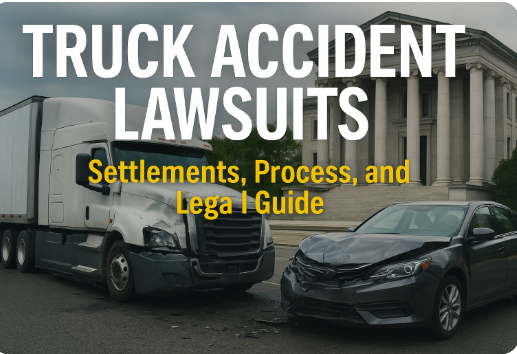
Truck accidents are among the most catastrophic crashes on the road. Unlike ordinary car accidents, collisions involving large commercial vehicles—such as 18-wheelers, semi-trucks, or big rigs—often result in devastating injuries, massive property damage, and tragically, loss of life.
Because of the scale of damage and the number of parties that may be held responsible (truck drivers, trucking companies, manufacturers, insurers), victims often turn to the legal system through a truck accident lawsuit.
This guide will cover:
- What a truck accident lawsuit is.
- The unique factors that make these cases different from regular car accidents.
- Who can be held liable.
- Why these lawsuits often lead to some of the largest settlements in personal injury law.
What Is a Truck Accident Lawsuit?
A truck accident lawsuit is a legal action filed by victims (or their families) who suffered injuries or losses in a truck crash caused by negligence.
These lawsuits seek financial compensation for:
- Medical expenses.
- Lost income.
- Property damage.
- Pain and suffering.
- In some cases, wrongful death.
Why Truck Accidents Are Different from Car Accidents
Truck accident cases are far more complex due to:
- Size and weight of trucks – An 18-wheeler can weigh up to 80,000 pounds, causing catastrophic injuries in collisions.
- Multiple liable parties – The driver, trucking company, cargo loaders, or even vehicle manufacturers may share responsibility.
- Federal regulations – The trucking industry is heavily regulated by the Federal Motor Carrier Safety Administration (FMCSA), adding layers of legal complexity.
- Insurance coverage – Trucking companies often carry multi-million-dollar insurance policies, making lawsuits high-stakes battles.
Common Causes of Truck Accidents
- Driver fatigue – Truckers often work long hours despite federal rest requirements.
- Distracted driving – Phone use, GPS, or eating while driving.
- Improper maintenance – Faulty brakes, tire blowouts, or neglected inspections.
- Overloaded or unsecured cargo – Shifting loads can cause rollovers or jackknife accidents.
- Speeding or reckless driving – Due to tight delivery deadlines.
- Alcohol or drug use – Though less common, still a serious factor.
Who Can Be Held Liable in a Truck Accident Lawsuit?
Unlike car accidents where usually one driver is at fault, truck accidents often involve multiple defendants:
- Truck driver – For negligence such as fatigue or reckless driving.
- Trucking company – For unsafe schedules, poor training, or lack of maintenance.
- Cargo loaders – If improperly loaded cargo contributed to the crash.
- Truck manufacturer – For defective parts or mechanical failures.
- Insurance companies – For covering responsible parties but refusing fair payouts.
Why Victims File Truck Accident Lawsuits
- To cover enormous medical bills and long-term rehabilitation.
- To replace lost income, especially if injuries prevent returning to work.
- To secure justice against corporations that put profits over safety.
- To provide for families in cases of wrongful death.
 Next Section (Part 2): The Legal Process of Truck Accident Cases – Step by Step (from filing to trial).
The Legal Process of a Truck Accident Lawsuit
Filing a truck accident lawsuit is not the same as filing a standard car accident claim. These cases involve federal regulations, multiple parties, and higher insurance coverage, making the process more complicated but also potentially more rewarding.
Here’s a step-by-step look at how the legal process unfolds:
1. Hiring a Truck Accident Lawyer
The first step is consulting with an experienced truck accident lawyer.
- They review the accident details, medical reports, and insurance coverage.
- They identify all possible defendants (driver, trucking company, manufacturer).
- Most truck accident attorneys work on contingency fees, meaning no upfront payment.
2. Investigation and Evidence Collection
Truck accidents require a detailed investigation that goes beyond police reports. Attorneys often gather:
- Driver’s logbooks to check for fatigue or violations of FMCSA hours-of-service rules.
- Black box data from the truck, which records speed, braking, and driving hours.
- Maintenance records to see if the truck was properly inspected.
- Witness statements, crash site photos, and traffic camera footage.
- Drug and alcohol test results for the truck driver.
 This stage is crucial because trucking companies often deploy defense teams immediately after a crash to minimize liability.
3. Filing the Complaint
Once evidence is strong, the lawyer files a formal complaint in civil court.
- The complaint outlines the accident, the responsible parties, and the damages sought.
- This officially begins the lawsuit process.
4. Defendant’s Response
The trucking company, driver, or insurer will respond by:
- Denying liability.
- Shifting blame to other drivers, road conditions, or mechanical issues.
- Arguing that the victim’s injuries were pre-existing.
5. Discovery Phase
Both sides exchange information in what is often the longest phase of litigation.
- Depositions: Witnesses, doctors, and company representatives testify under oath.
- Expert testimony: Accident reconstruction specialists or trucking safety experts analyze the case.
- Document sharing: Maintenance logs, training manuals, and driver records are revealed.
 Example: A lawyer might uncover that a company forced drivers to exceed federal driving hour limits, directly causing fatigue and the crash.
6. Settlement Negotiations
Most truck accident lawsuits are settled before trial.
- Victims receive compensation without facing lengthy court battles.
- Companies prefer settlements to avoid public trials and massive jury awards.
- Settlement talks often intensify after discovery when evidence strongly favors the victim.
 Average truck accident settlements are much higher than car accident cases, often reaching millions of dollars.
7. Trial (If No Settlement)
If settlement fails, the case goes to trial.
- Lawyers present evidence, black box data, and expert testimony.
- The jury decides liability and determines compensation.
- Trials are high-risk but can lead to record-breaking verdicts.
8. Appeals
If the defendant loses, they may file an appeal to delay or reduce the payout.
- Appeals focus on legal errors rather than new evidence.
- In many cases, defendants settle during the appeal to avoid further costs.
Why Truck Accident Lawsuits Are Challenging
- Corporate defense teams: Trucking companies hire aggressive lawyers to protect profits.
- Complex laws: Federal trucking regulations make cases highly technical.
- High stakes: With millions on the line, defendants fight hard to minimize payouts.
Next Section (Part 3): Compensation in Truck Accident Lawsuits – Types of Damages, Average Settlements, and Factors That Influence Payouts.
Compensation in Truck Accident Lawsuits
One of the most critical questions victims and families ask is: “How much is a truck accident lawsuit worth?” Because of the scale of damages and multiple liable parties, truck accident settlements are often much higher than car accident cases.
1. Types of Damages in Truck Accident Lawsuits
a. Economic Damages (Financial Losses)
- Medical bills (emergency care, surgeries, rehabilitation, long-term treatment).
- Lost wages and reduced earning capacity.
- Property damage (vehicle repair or replacement).
- Out-of-pocket costs related to the accident.
b. Non-Economic Damages (Emotional Losses)
- Pain and suffering.
- Emotional trauma and mental anguish.
- Loss of quality of life.
- Loss of companionship (in wrongful death cases).
c. Punitive Damages
In cases of gross negligence (e.g., forcing drivers to work beyond legal hours, drunk driving, reckless speeding), courts may award punitive damages to punish the company and deter future misconduct.
2. Average Truck Accident Settlements
Truck accident settlements vary widely depending on injuries and liability, but averages are much higher than standard car accidents:
- Minor injuries: $50,000 – $200,000.
- Serious injuries (broken bones, spinal damage): $200,000 – $1 million.
- Severe injuries (paralysis, brain damage, amputations): $1 million – $5 million+.
- Wrongful death cases: $2 million – $10 million+.
Example: A Texas jury awarded $90 million in a truck accident case where negligence in vehicle maintenance led to a fatal crash.
3. Factors That Influence Compensation
- Severity of injuries – Life-altering injuries or wrongful death increase payouts.
- Liability distribution – Multiple defendants (driver, company, manufacturer) can raise total compensation.
- Strength of evidence – Black box data, maintenance records, and expert testimony strengthen cases.
- State laws – Compensation rules and damage caps vary by jurisdiction.
- Insurance policies – Trucking companies often carry multi-million-dollar coverage, allowing for larger settlements.
4. Structured vs. Lump Sum Settlements
- Lump Sum: One-time payment covering the full award.
- Structured Settlement: Payments spread over months or years, ensuring long-term financial stability.
5. Why Truck Accident Payouts Are Higher
- Trucks cause more severe injuries than cars due to their massive size and weight.
- Companies often have deep pockets and large insurance coverage.
- Juries are more likely to award punitive damages against corporations prioritizing profit over safety.
3. How much is my truck accident case worth?
- Settlements can range from hundreds of thousands to tens of millions, depending on injuries and liability.
4. Do most truck accident lawsuits go to trial?
- No. Around 80–90% of cases settle before trial, but strong cases can still go to court for higher verdicts.
5. How long does it take to resolve a truck accident claim?
- Simple cases: 6–12 months.
- Complex cases (with multiple defendants): 1–3 years.
Conclusion: Why Truck Accident Lawsuits Matter
Truck accidents are among the most devastating road crashes, often leaving victims with lifelong injuries or families grieving after wrongful death. A truck accident lawsuit gives victims a way to:
- Secure financial compensation for medical bills, lost wages, and suffering.
- Hold trucking companies and negligent drivers accountable.
- Push the industry toward safer practices through legal accountability.
Truck Accident Lawsuits: Settlements, Process, and Legal Guide