
Divorce Lawsuit: Process, Costs, and Legal Guide
Divorce Lawsuit: Process, Costs, and Legal Guide
Introduction
Divorce is one of the most emotionally and financially challenging legal processes that families face. When a marriage breaks down, the separation doesn’t just affect the couple—it impacts children, property, finances, and even extended families. In many cases, couples resolve their issues amicably, but when disputes arise, the matter escalates into a divorce lawsuit.

A divorce lawsuit is more than just ending a marriage. It involves:
- Dividing property and assets.
- Deciding child custody and visitation rights.
- Determining spousal support (alimony).
- Resolving child support obligations.
This guide will walk you through the entire divorce process, explain the costs and settlements, and show you how to choose the right divorce lawyer to protect your rights.
What Is a Divorce Lawsuit?
A divorce lawsuit is a legal proceeding where one spouse files a petition in court to legally dissolve the marriage. Unlike uncontested divorces (where both parties agree on terms), a divorce lawsuit typically arises when there are disputes over property, finances, or child custody.
 Legal definition:
A divorce lawsuit is a legal case filed in family court to formally end a marriage and resolve disputes regarding assets, children, and financial responsibilities.
Types of Divorce Cases
1. Uncontested Divorce
- Both spouses agree on major issues (assets, custody, support).
- Faster and less expensive.
- Often does not require a full trial.
2. Contested Divorce
- Spouses cannot agree on one or more issues.
- Requires court hearings, evidence, and sometimes a trial.
- More time-consuming and costly.
3. Fault Divorce
- One spouse claims the other is at fault (adultery, abuse, abandonment).
- Less common today but still used in some states.
4. No-Fault Divorce
- Neither party has to prove wrongdoing.
- Most common type, often citing “irreconcilable differences.”
Why Divorce Lawsuits Are Important
- They ensure fair distribution of property.
- They protect the best interests of children.
- They establish legal rights and obligations for both spouses.
- They provide a structured way to resolve disputes when negotiations fail.
 Next Section (Part 2): The Divorce Process (Step by Step) – From filing the petition to final judgment.
The Divorce Process: Step by Step
Filing for divorce can feel overwhelming, especially when emotions are running high. While each state or country has its own specific rules, the divorce process generally follows a similar sequence.
1. Filing the Petition
- One spouse (the petitioner) files a divorce petition or complaint in family court.
- The petition includes basic information about the marriage, grounds for divorce, and requests regarding custody, property, and support.
2. Serving the Divorce Papers
- The other spouse (the respondent) must be formally served with the divorce papers.
- This ensures that both parties are legally notified.
3. Response from the Spouse
- The respondent has a set period (often 20–30 days) to respond.
- If they agree, the case may proceed as an uncontested divorce.
- If they disagree, the case becomes a contested divorce.
4. Temporary Orders
While the divorce is pending, the court may issue temporary orders to:
- Decide who lives in the marital home.
- Determine temporary child custody and visitation.
- Order temporary spousal or child support.
These orders remain in effect until the final judgment.
5. Discovery Phase
In contested divorces, both sides exchange financial and personal information:
- Income statements, tax returns, bank records.
- Property ownership documents.
- Witness statements or expert reports (e.g., child psychologists).
 Example: If one spouse suspects the other is hiding assets, discovery ensures transparency.
6. Negotiation and Mediation
Courts often encourage spouses to settle disputes outside of trial through:
- Mediation: A neutral mediator helps spouses reach an agreement.
- Negotiation: Lawyers for both sides try to find middle ground.
Settlements reached here can save time, money, and emotional stress.
7. Court Hearings and Trial
If no agreement is reached:
- The case goes to trial before a family court judge.
- Both sides present evidence, witnesses, and legal arguments.
- The judge makes final decisions on custody, property division, and support.
8. Final Divorce Decree
- Once the judge rules, the court issues a final divorce decree.
- This legally dissolves the marriage and outlines each spouse’s rights and responsibilities.
9. Post-Divorce Modifications
Life circumstances change. Either spouse can later request modifications to:
- Child custody or visitation schedules.
- Child support or spousal support.
Why the Divorce Process Can Be Complicated
- Emotional stress makes cooperation difficult.
- Complex financial assets (businesses, real estate, investments) require expert evaluation.
- Disputes over children often lead to long legal battles.
Next Section (Part 3): Divorce Settlements and Costs – How assets are divided, support is calculated, and the average cost of divorce.
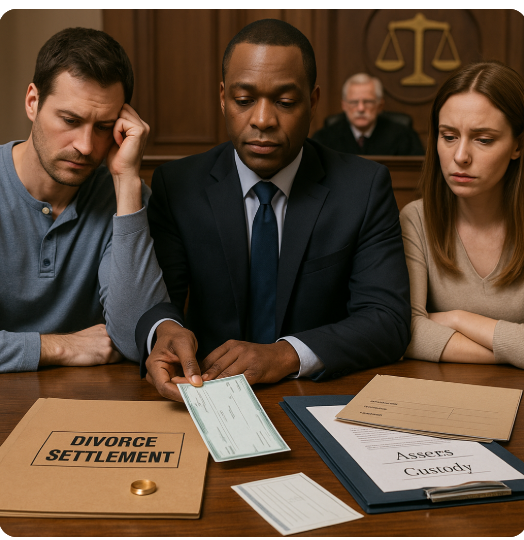
Divorce Settlements and Costs
One of the most difficult aspects of a divorce lawsuit is resolving financial matters. Divorce not only ends a marriage but also requires dividing everything the couple shared—from money and property to debts and responsibilities.
1. What Is a Divorce Settlement?
A divorce settlement is a written agreement (or court judgment) that finalizes all legal and financial issues between spouses. It usually includes:
- Division of marital property and debts.
- Child custody and visitation arrangements.
- Child support payments.
- Spousal support (alimony).
If spouses reach an agreement through negotiation or mediation, the settlement is submitted to the court for approval. If not, the judge decides after trial.
2. Division of Property and Assets
Dividing property is often the most contested issue in a divorce. Courts follow one of two main systems:
- Community Property States: Assets acquired during marriage are divided 50/50.
- Equitable Distribution States: Assets are divided fairly (not always equally), based on factors like income, contributions, and needs.
Assets typically divided include:
- Real estate (homes, land, rental properties).
- Bank accounts and investments.
- Retirement funds and pensions.
- Vehicles and valuables.
3. Spousal Support (Alimony)
Spousal support is financial assistance paid by one spouse to the other after divorce. Factors considered include:
- Length of the marriage.
- Each spouse’s earning capacity.
- Standard of living during the marriage.
- Contributions made by each spouse (financial or household).
Types of alimony:
- Temporary (during divorce proceedings).
- Rehabilitative (to support education or training).
- Permanent (in long-term marriages with major income gaps).
4. Child Support and Custody Costs
- Child support is calculated based on income, number of children, and custody arrangements.
- Parents may also share additional expenses such as medical bills, education, and extracurricular activities.
Example: A higher-earning parent may pay $1,000+ per month in child support, depending on state guidelines.
5. Average Cost of Divorce
The cost of a divorce depends on whether it is contested or uncontested:
- Uncontested divorce: $1,000 – $5,000 (mainly filing fees and basic legal services).
- Contested divorce: $10,000 – $30,000+ (due to legal battles, trials, and expert witnesses).
- High-net-worth divorces can easily exceed $100,000 in legal costs.
6. Hidden Costs of Divorce
- Emotional stress leading to therapy or counseling.
- Relocation expenses if one spouse moves out.
- Tax consequences of property division and support payments.
Why Settlements Are Better Than Trials
- Faster: Trials can take months or years.
- Cheaper: Legal fees rise sharply during litigation.
- Less stressful: Settling avoids the emotional toll of courtroom battles.
Choosing the Right Divorce Lawyer
Divorce is both a legal and emotional battle. Having the right divorce lawyer can make the process smoother, protect your rights, and ensure a fair outcome.
Qualities of a Good Divorce Attorney
- Experience in family law: A lawyer specialized in divorce and custody cases.
- Negotiation skills: Ability to reach favorable settlements without lengthy trials.
- Litigation expertise: Strong courtroom skills if the case goes to trial.
- Compassion and understanding: Guiding clients through emotional stress.
- Affordability and transparency: Clear fee structure and payment options.
Many of the best divorce attorneys offer free consultations and flexible payment plans to help clients manage costs.
Common FAQs About Divorce Lawsuits
1. How long does a divorce take?
- Uncontested divorces: 1–6 months.
- Contested divorces: 1–2 years depending on disputes.
2. Do I need a lawyer for divorce?
- Not always for uncontested divorces, but highly recommended for contested cases involving property, custody, or support.
3. Who gets custody of the children?
- Courts decide based on the best interests of the child, considering stability, parental involvement, and financial capacity.
4. How much does a divorce cost?
- Simple cases may cost under $5,000, but complex contested divorces can exceed $30,000.
5. Can divorce settlements be changed later?
- Yes. Custody, child support, and even alimony can be modified if circumstances change.
Conclusion: Why Divorce Lawsuits Matter
A divorce lawsuit is not just about ending a marriage—it is about creating a stable future for both spouses and their children. The process ensures:
- Fair division of assets and debts.
- Clear custody and support arrangements.
- Legal protection of rights and obligations.
We’ve covered:
- What a divorce lawsuit is.
- The step-by-step divorce process.
- Divorce settlements and costs.
- How to choose the right divorce lawyer.
If you are considering divorce, don’t face it alone. Speak with an experienced family law attorney today to understand your rights and secure the best outcome for your future.
Call to Action (CTA)
For more in-depth legal guides, visit lawsuit.qcmdroit.online:
- [Truck Accident Lawsuit: Settlements & Legal Process]
- [Wrongful Death Lawsuit: Compensation & Process]
- [Medical Malpractice Lawsuit Explained]
- [Class Action Lawsuits: A Complete Guide]
Stay informed. Protect your rights. Build a better tomorrow.